

🐺 Wolf within
Learn how much wolf DNA is in your dog, what it means when dogs paw each other, and how homemade diets can be more balanced.


👋 Hi, and welcome back to my free newsletter where I share hand-selected dog research, news, and tips every week.
In this week's edition, you will learn how much wolf DNA is in your dog, what it means when dogs paw each other, and how homemade diets can be more balanced.
Enjoy reading! ✨

📑 STUDY
Wolf DNA
Those small dogs trotting along the sidewalk may seem harmless, but appearances can be deceiving, many of them carry traces of wolf ancestry.
That surprising conclusion was revealed Monday by U.S. researchers, who found that almost two-thirds of all dog breeds contain measurable amounts of wolf DNA.
According to the scientists, this genetic link is not simply a remnant from the original domestication of dogs from wolves roughly 20,000 years ago.
Instead, it points to interbreeding between domestic dogs and wild wolves within the past few thousand years.
This does not mean that “wolves are coming into your house and mixing it up with your pet dog,” Logan Kistler, a curator at the Smithsonian Museum of Natural History and co-author of a new study, told AFP.
The findings suggest that wolf DNA has helped shape modern dogs’ size, sense of smell, and even temperament.
“The majority of dogs today have low, but detectable levels of post domestication wolf ancestry that has shaped their evolution and conferred unique advantages to their survival in diverse human environments,” the scientists conclude in a study published on Monday.
Although dogs and wolves are capable of producing offspring together, such interbreeding has long been considered uncommon.
“Prior to this study, the leading science seemed to suggest that in order for a dog to be a dog, there can’t be very much wolf DNA present, if any,” lead study author Audrey Lin of the American Museum of Natural History said in a statement.
To investigate further, researchers examined thousands of dog and wolf genomes drawn from publicly available genetic databases.
Their analysis showed that more than 64 percent of modern dog breeds have some degree of wolf ancestry. Even the tiny chihuahua carries about 0.2 percent.
“This completely makes sense to anyone who owns a chihuahua,” Lin joked.
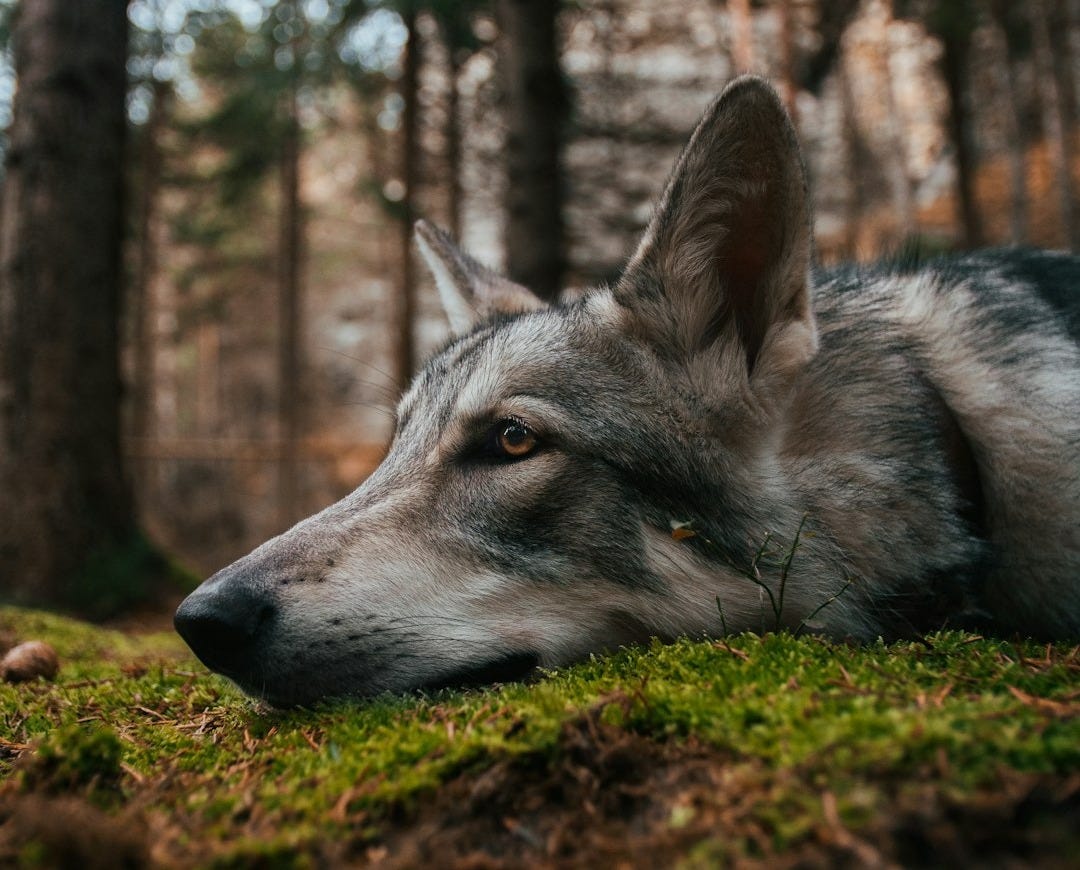
The highest levels of wolf DNA were found in Czechoslovakian wolfdogs and Saarloos wolfdogs, which can have up to 40 percent wolf ancestry.
Among breeds commonly kept as pets, the Grand Anglo-Francais Tricolore hound ranked highest, with roughly five percent wolf DNA. Sighthounds like Salukis and Afghans also showed relatively high levels.
While wolf ancestry often correlated with larger size, this was not universal - Saint Bernards, for example, showed no detectable wolf DNA at all.
The study also revealed that every village dog examined (animals that live near human communities but are not owned as pets) carried wolf ancestry.
Kistler suggested that village dogs may play a key role in introducing wolf DNA into domestic populations, since they have more chances to interact with wolves.
He added that female wolves displaced from their packs by human activities such as habitat destruction might end up mating with stray dogs.
Overall, “Arctic sled dogs, pariah breeds, and hunting dogs have the greatest wolf ancestry, while on average, terriers, gundogs, and scent hounds have the least,” the researchers write.
The team also compared genetic findings with personality descriptions commonly used by kennel clubs.
Breeds with minimal or no wolf ancestry were more often labeled as friendly, affectionate, and easy to train.
By contrast, dogs with higher levels of wolf DNA were more frequently described as wary of strangers, independent, dignified, or territorial.
Still, the researchers noted that many traits appeared equally often in both low- and high-wolf-content breeds, including “intelligent,” “obedient,” “good with children,” “dedicated,” “calm,” and “cheerful.”
Kistler stressed that breed descriptions are broad generalizations and do not determine how an individual dog will behave.
“Wolves are evolved for specific habitats and specific conditions, and dogs have been carried to every corner of the inhabited world by people,” he said.
As dogs spread alongside humans, they adapted to new environments, sometimes benefiting from “wolf genes that gave them advantages in certain contexts,” he explained.
One example is seen in several Tibetan breeds, including the fluffy Lhasa Apso, which possess a gene called EPAS1 that helps with high-altitude adaptation, a gene also found in Tibetan wolves.

🧠 BEHAVIOR
Pawing
It’s one of the sweetest things dogs do: one pup gently places a paw on another while they look at each other with unmistakable intent. But what does this canine version of footsie actually mean?
You’ve probably seen it before. Maybe your dog was whining softly, bowing and stretching a paw toward a friend as if inviting them to join in. Or perhaps your pup casually tapped another dog on the back while hanging out.
Depending on the dogs involved, the situation, and the environment, these paw movements can mean very different things. That’s why it’s so important for pet parents to watch closely when it happens.
Any interaction between two dogs can be thought of as a conversation. Just like human conversations, these exchanges have a tone.
Sometimes they’re polite and respectful; other times they’re pushy or impolite. That tone determines whether you can let the interaction continue or whether you need to step in.
If one or both dogs react poorly, the situation can escalate into something physical. As with disagreements between people, responsibility is rarely one-sided. Understanding what’s being communicated can help prevent problems before they start.
Here’s how to interpret your dog’s pawing behavior and how to know when it’s time to intervene:
There isn’t one single answer. The reason depends on the dog’s personality, the context, and their relationship with the other dog. That said, a few common motivations tend to show up again and again.
They want attention.
Sometimes a dog paws at another because they’re seeking social interaction. In these moments, you may notice a high-pitched whine or other attention-seeking behaviors that suggest the dog is asking for engagement.
They want to play.
Pawing can also be an invitation to have fun. Dogs may bounce forward and place both front paws on another dog in a quick, energetic movement that makes contact with the shoulder or torso. While this is often meant as play, it can come across as overly intense or rude if the other dog isn’t equally enthusiastic.
They’re feeling assertive.
Dogs often gather information about their social relationship through body positioning. Placing a paw on another dog’s back isn’t always aggressive, but it can signal confidence or an attempt to test boundaries. These moments should be monitored to ensure both dogs remain comfortable.
They’re setting boundaries.
Some dogs use their paws to say “enough” or “don’t push it.” This might look like gently placing a paw on another dog, straightening a leg, or making a subtle pushing motion. This behavior commonly appears when a calmer or older dog is trying to slow down a younger, overly energetic one.
They’re feeling affectionate.
In some cases, dogs use their paws the same way humans use arms. When you see dogs resting paws over each other or leaning in closely, it may simply be a sign of comfort and bonding.
Body language is everything. Pay attention to what both dogs are doing before, during, and after the interaction.
Signs the behavior may be assertive or antagonistic include:
Stiff posture
A paw placed firmly on the other dog’s back
Teeth showing
Ears pinned back
Visible whites of the eyes
Growling
Signs the behavior is playful or socially curious include:
Loose, relaxed movement
Gentle pawing to invite play
Soft mouths and relaxed lips
Floppy, neutral ears
Soft, relaxed eyes
As adorable as it can be, pawing isn’t always appropriate.
When the other dog doesn’t enjoy it.
Not all dogs like being touched this way. If one dog looks uncomfortable or tries to move away, it’s important to intervene. Allowing rude behavior to continue can reinforce bad habits and increase the risk of conflict. Likewise, if your dog is being bothered and has already shown patience, stepping in helps prevent bullying on either side.
Helpful interventions include calmly calling your dog away, asking both dogs to perform a simple cue like sitting, or redirecting their attention to another activity. Stay neutral, avoid punishment, and separate them briefly if needed.
If two dogs have a long-standing, healthy relationship, minor moments of tension often resolve on their own. But if they’re unfamiliar with each other, especially around valued resources like food, toys, or favorite people, close supervision is essential.
When it signals stress.
Frequent pawing for attention can sometimes indicate anxiety rather than playfulness. Notice whether your dog does this more during stressful situations, such as storms or chaotic environments. If the behavior seems intense or desperate, it may be your dog seeking reassurance and connection, not trying to be annoying.
Dogs don’t ask for attention without a reason. Often, pawing is simply their way of saying they need comfort, interaction, or support in that moment.
Understanding the message behind the movement helps you respond in a way that keeps everyone safe and happy.
🍖 FOOD
Homemade diets
Homemade dog food is widely viewed as a wholesome alternative to heavily cooked and highly processed commercial options.
Many pet owners feel uneasy trusting mass-produced kibble or raw foods, especially with frequent news of pet food recalls.
Preparing meals at home gives owners full control over what their dogs eat. While this approach can seem like a smart way to manage food sensitivities or reduce the risk of Salmonella, recent research suggests that homemade diets often fall short of meeting dogs’ nutritional needs.
A study released in early November by Texas A&M found that just 6% of homemade dog food recipes satisfy basic nutritional standards for dogs. Published in the American Journal of Veterinary Research, the findings highlighted several troubling patterns.
The researchers used data from the Dog Aging Project, examining 1,726 home-prepared diets reported by owners of dogs enrolled in a database of 50,000 animals.
Participants completed open-ended surveys, and the responses were analyzed using Balance It, an online tool that follows nutritional guidelines set by the FDA and the Association of American Feed Control Officials.
While the meals included a wide range of ingredients, they generally failed to provide complete nutrition. Meat appeared in 90% of recipes, making it the most common ingredient, while vegetables were included in 65% of meals.
The study also found that 45% of pet owners add commercial products, such as premade raw or cooked foods or meal toppers, to their homemade recipes.
“We found that only 6% of homemade diets had the potential to be nutritionally complete,” said Dr. Janice O’Brien, a doctoral researcher at the Virginia-Maryland College of Veterinary Medicine at Virginia Tech.
“Since our study didn’t include exact ingredient amounts, it’s possible that a smaller percentage than 6% were nutritionally complete.”
Most pet owners are aware of foods dogs should never eat, carefully avoiding toxic ingredients like grapes and xylitol. However, understanding what nutrients dogs actually need is just as important.
Balanced levels of calcium and phosphorus are essential for canine health. Deficiencies can lead to kidney problems or weakened bones, and dogs with existing conditions may experience worsening symptoms if their homemade diet lacks these nutrients.
For those committed to feeding homemade meals, working with a veterinary nutritionist is strongly recommended.
A professional can help design recipes that are both balanced and complete, ensuring that vitamins and minerals come from appropriate sources.
Once a plan is established, consistency is critical. The study notes that even small changes to a carefully formulated diet can result in nutritional deficiencies that may impact a dog’s overall well-being.