

🏈 Puppy bowl
Learn how cleaners can harm pets, dogs’ amazing homing abilities, and what happens during this year’s puppy bowl.


👋 Hi and welcome back to my free newsletter where I share hand-selected dog research, news, and tips every week.
In this week's edition, you will learn how cleaners can harm pets, dogs’ amazing homing abilities, and what happens during this year’s puppy bowl.
Enjoy reading! ✨

📑 STUDY
Chemicals and cancer
A new study suggests that dogs exposed to higher levels of chemicals commonly found in household products are more likely to develop bladder cancer.
The findings may have implications for humans who share the same environment and have genetic similarities with their pets.
Researchers at Duke University conducted the study by attaching silicone devices to the collars of over 100 dogs, allowing them to collect chemical samples over five days.
The research, published in a peer-reviewed journal, focused on 120 chemicals and detected around 40 in at least half of the dogs.
The presence and concentration of these chemicals were significantly higher in warmer regions.
Among the chemicals strongly linked to bladder cancer markers in dogs' urine were toxic flame retardants, phthalates (commonly used in household goods), and anthracene, a widespread air pollutant. These substances are pervasive in homes and the surrounding environment.
“When you start looking at cumulative chemical exposures, it can feel overwhelming, especially when trying to make informed choices about what you bring into your home,” said Catherine Wise, a Duke researcher and co-author of the study.
Wise emphasized that regulatory agencies typically evaluate chemical toxicity in isolation, but in reality, people and pets are exposed to a mixture of chemicals that may contribute to bladder cancer and other health issues.
She believes the study strengthens the case for further research and stricter regulations on multi-chemical exposures.
The most common route of exposure is household dust. Chemicals can detach from products and settle on dust particles, which are then inhaled or ingested.
Previous studies have also found that hazardous chemicals can leach from plastic dog toys, while air and water pollution could be additional sources - although these were not specifically measured in this study.
One of the strongest cancer-related associations was with PBDEs, a class of flame retardants once widely used in furniture and electronics.
Though banned in 2004, these chemicals can persist in old household items and take hundreds of years to degrade, making them a long-term hazard.
Another concerning chemical, benzyl butyl phthalate, was commonly used in vinyl flooring until it was phased out in 2015.
However, it can still be found in older floors and other plastic products, such as children’s toys.
Air pollution is another likely contributor. Anthracene, a toxic polycyclic aromatic hydrocarbon (PAH), is produced by combustion and is often found in higher concentrations near industrial areas or major roadways.
Dogs in warmer climates were found to have higher chemical exposure, likely because many of these substances are volatile and release into the air more readily in heat.
Additionally, dogs exposed to a wider variety of chemicals showed higher overall levels, suggesting a cumulative effect.
While it is nearly impossible to eliminate exposure entirely, Wise recommends taking small steps to reduce chemical contact over time.
She suggests reviewing household products and making gradual changes, such as choosing fragrance-free items, as fragrances often contain toxic additives.
Regular cleaning can also help minimize exposure. Wise advises using a damp cloth for dusting and a vacuum with a HEPA filter to capture airborne contaminants.
“Even a small adjustment can make a difference,” Wise said, encouraging pet owners and households to take proactive steps in reducing chemical exposure.

🧠 BEHAVIOR
Long-distance homing
Dogs have long amazed humans with their intelligence, loyalty, and seemingly supernatural ability to find their way home over vast distances.
While many animals display homing abilities, dogs stand out due to their strong emotional bonds with their owners.
The question of how they accomplish such extraordinary journeys remains one of science’s great mysteries.
Some of the most astonishing homing stories have been documented throughout history.
One of the most famous cases is that of Bobbie the Wonder Dog, who disappeared during a car trip in 1923 and, six months later, returned home - on foot - traveling an estimated 2,500 miles from Indiana to Oregon.
Another incredible story involves an Irish Terrier named Prince, who, in 1914, traveled from London to Armentières, France, to find his owner, Private James Brown.
Even more perplexing is the case of a spaniel named Joker, who, during World War II, traveled 30 miles to Oakland Harbor, boarded a boat, and navigated through multiple island stops to find his owner in the Pacific.
While scent tracking is often cited as the primary explanation for such homing feats, some cases defy this reasoning - especially when dogs find their owners in completely new places.
Scientific experiments have explored alternative explanations, including the possibility that dogs use the Earth’s magnetic field as a navigational tool, much like birds and other migratory animals.
Some studies suggest that the most skilled homing dogs do not rely on scent alone but instead enter a trancelike state, seemingly guided by an internal compass.
One of the most compelling aspects of homing behavior is the emotional connection that seems to drive it.
Emotion may be the key factor in why dogs embark on these incredible journeys. Some dogs, after finally reuniting with their owners, have been known to collapse from exhaustion and even pass away shortly afterward - suggesting that the journey is motivated by an intense, almost obsessive drive to reunite.
This emotional bond raises an intriguing question: Do dogs home in on a place or on a person?
There are several cases where dogs appear to track their owners rather than a familiar location.
For example, Rupert Sheldrake, a researcher in animal behavior, studied a dog named Pepsi that was able to find family members across six different addresses in Leicester, England.
Another case from Australia in 1941 involved a dog named Ginger, who had never been to Wollongong but somehow found his owner there after a 200-mile journey.
Such stories suggest that dogs may be following more than just physical cues. Could they be sensing the emotional energy or mental imprint of their owners?
This idea aligns with research in human perception, such as remote viewing - an ability once explored by intelligence agencies to locate missing objects or people.
Some evidence even suggests that ancient human societies possessed homing abilities, as described by early naturalists observing Indigenous guides who could navigate vast landscapes without maps or compasses.
Despite decades of research, the exact mechanisms behind dog homing remain elusive. Some key questions that remain unanswered include:
Do dogs rely on a combination of sensory cues, including smell, sight, and magnetoreception?
How much does emotional attachment influence a dog’s ability to home?
Can homing abilities be trained or enhanced in certain breeds?
Do dogs have an unexplored form of perception that allows them to sense their owners over great distances?
While modern technology has allowed scientists to track homing behavior more closely, the underlying mechanisms remain one of nature’s great puzzles.
Some researchers suggest that the answer may lie in a combination of magnetic navigation, emotional bonding, and cognitive mapping - while others believe we may still be missing a fundamental piece of the puzzle.
In an era of technological advances, where GPS and digital maps guide human travel, dogs continue to astound us with their natural ability to find their way home - often against impossible odds.
Whether guided by scent, magnetic fields, or an unseen emotional tether, their journeys stand as a testament to the incredible intelligence and devotion of man’s best friend.

📰 NEWS
Puppy bowl
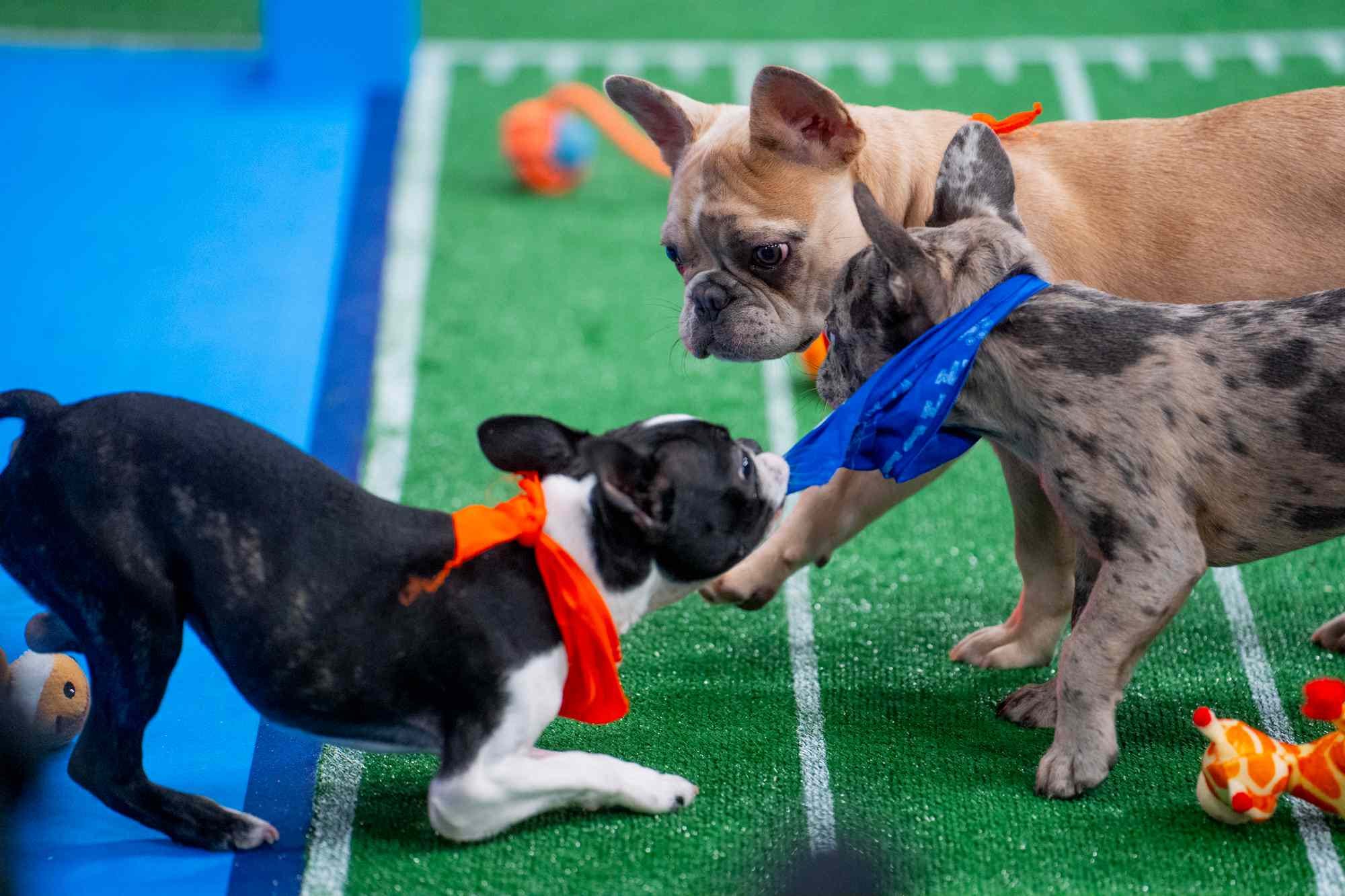
Super Bowl Sunday is about more than just football - it’s also time for Puppy Bowl XXI!
This year’s furry face-off features Team Ruff against Team Fluff, with 142 adorable puppies from 80 shelters across 40 states (and two countries) vying for the highly coveted “Lombarky” trophy, a fun twist on the NFL’s Vince Lombardi Trophy.
One lucky pup will also earn the title of MVP - Most Valuable Pup.
“This is our biggest roster ever, which is a lot to manage,” said longtime Puppy Bowl referee Dan Schachner. “But we’re ready.”
The action kicks off at 2 p.m. ET, but fans can tune in an hour earlier for a special pregame show.
This behind-the-scenes segment will showcase the Puppy Combine, where pups display their skills, and the “puppy draft,” which determines the final 10 players for the game.
“Humans have a three-cone drill. We have a three-bone drill,” Schachner explained.
“We also have things you won’t see in regular football, like a ball pit and a belly rub scratching contest. We’re the ones doing the scratching.”
Expect to see even more fun elements on the field, including ramps and tire tunnels to keep the pups engaged.
“It’s going to be really fun and cute,” said Schachner, now in his 14th year as the Puppy Bowl ref.
With all the adorable action happening on the field, staying focused might seem like a challenge, but Schachner says he has a trick to keep his head in the game.
“If the dogs were at my eye level, it would be really hard,” he admitted. “Since I’m taller, I can look down at the action, assess infractions, and pick my battles.”
Beyond the playful competition, Puppy Bowl XXI shines a spotlight on pet adoption.
Every dog featured in the game is a rescue, and the event serves as a reminder to adopt rather than shop for a pet.
“Don’t shop for a dog. Adopt a dog,” Schachner emphasized. “Overpopulation is still a big issue in this country. Hundreds of thousands of dogs sit in shelters every year, and sadly, many don’t make it out if space runs out.”
Recent natural disasters, such as the California wildfires, have made the problem even worse.
“Space is a huge issue,” Schachner noted. “Some shelters had to relocate dogs just to make room for displaced animals.”
Schachner has personally fostered over 40 dogs, and in 2024, he adopted Whistle, a poodle mix who even served as an assistant referee at last year’s Puppy Bowl - though her focus wasn’t exactly on officiating.
“She was terrible,” Schachner joked. “All she wanted to do was play with the other dogs.”
This year’s Puppy Bowl lineup features some hilariously named canine competitors, including Team Ruff’s Saquon Barky (a nod to Philadelphia Eagles running back Saquon Barkley) and Team Fluff’s Paws Allen (named after Buffalo Bills quarterback and NFL MVP Josh Allen).
This year’s Puppy Bowl will also feature 11 special needs dogs, including Jolene, an American Pit Bull Terrier-American Staffordshire Terrier mix who navigates the field with the help of a wheelchair. Additionally, a few of the participating pups are deaf.
Cannot wait for more research to know if it’s scent or magnetic field that helps guide dogs!